

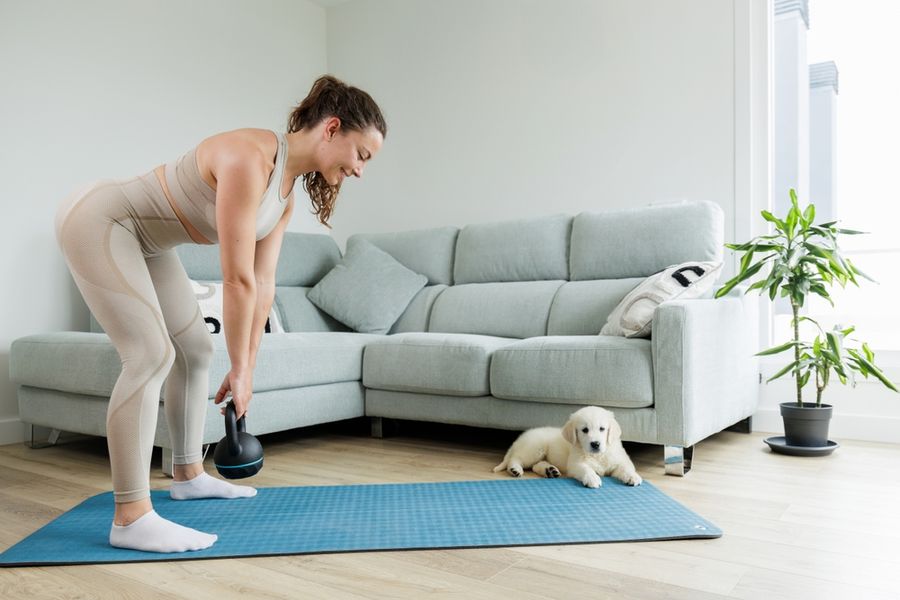
Starting a strength training routine at home is easier than many people think, especially when you focus on simple gear designed for beginners. You don’t need heavy machines or complicated equipment to build strength, confidence, and consistency. A few basic tools can help you learn proper form, support safe progress, and fit exercise into your daily routine without leaving the house. The right beginner-friendly gear makes home training both accessible and effective.
1. Resistance Bands for Easy, Full-Body Training
Resistance bands are one of the best tools for beginners because they are gentle on joints and incredibly versatile . They come in different resistance levels, allowing you to start light and gradually increase difficulty as you get stronger. Bands can be used for arm curls, leg extensions, squats, rows, and core exercises, giving you a complete workout with just one piece of equipment.
Another benefit of resistance bands is how they support controlled movement. Unlike weights, which rely on gravity, bands create tension throughout the entire exercise. This helps beginners learn proper form and avoid relying on momentum. Bands also take up very little space, making them ideal for apartments or small training areas.
Whether you're warming up, strengthening specific muscle groups, or stretching, resistance bands adapt to almost every fitness need. They offer a smooth introduction to strength training without the pressure of handling heavy weights right away.
2. Dumbbells for Building Strength at a Comfortable Pace
Dumbbells are a classic choice for home workouts and an excellent next step for beginners who want to progress from resistance bands. They come in a wide range of weights, so you can choose what feels manageable without overdoing it. Many people start with lighter dumbbells for exercises like shoulder presses, lunges, and bicep curls before gradually increasing to heavier ones.
For those with limited space, adjustable dumbbells are a practical option. They allow you to switch between weights without needing a full rack. Beginners appreciate how dumbbells provide a clear sense of improvement as they become easier to lift over time.
Dumbbells also support functional movement—exercises that mimic everyday tasks such as lifting, reaching, and balancing. This makes them useful for both strength and coordination. When added to a regular routine, dumbbells help build balanced strength throughout the body.
3. Kettlebells for Simple, Effective Functional Training
Kettlebells may look unusual compared to other workout tools, but they are one of the most effective pieces of gear for building functional strength . The handle and shape of a kettlebell make it easy to hold during swinging, lifting, and controlled movements. These exercises help strengthen multiple muscle groups at once, offering a full-body workout in a short amount of time.
Beginners often start with simple kettlebell movements like deadlifts, carries, and squats. As they gain confidence, they can try swings and other dynamic exercises that improve both strength and conditioning. Kettlebells are especially good for building core stability because many movements require steady engagement of the midsection.
Because kettlebells don’t require much space, they fit easily into most home gyms. With just one or two kettlebells, beginners can perform a wide range of exercises that build strength in a safe and controllable way.
4. A Sturdy Mat for Comfort and Confidence
A reliable exercise mat is often overlooked, but it is one of the most important tools for beginners. It provides support and cushioning during strength exercises, especially those performed on the floor, such as planks, glute bridges, and abdominal movements. A mat also creates a defined workout space, helping you stay focused and comfortable during your routine.
For beginners, comfort plays a big role in building consistency. A good mat prevents slipping and reduces pressure on knees, elbows, and wrists. It allows you to practice movements safely and confidently without worrying about hard flooring or unstable surfaces.
Mats also help with stretching and cooldown exercises, both of which are important for preventing stiffness and supporting long-term progress. With a mat in place, your home workout area feels organized and ready whenever you are.
5. A Doorway Pull-Up Bar for Upper-Body Progress
Pull-up bars offer beginners an accessible way to build upper-body and core strength. Even if you can’t perform a pull-up yet, a doorway bar is still useful for modified exercises such as hanging knee raises, assisted pull-ups, or simple dead hangs. These movements help strengthen your grip, shoulders, and back.
Many pull-up bars fit easily into standard doorframes without permanent installation. They can be removed between workouts and stored in a closet or under a bed. As beginners gain strength, they can gradually move from assisted movements to more challenging variations.
Pull-up bars add variety to home strength training routines and give beginners a clear path for long-term improvement.
A Simple Setup for Stronger, More Confident Training
Setting up a beginner-friendly home gym doesn’t require expensive equipment or a large space. Tools like resistance bands, dumbbells, kettlebells, mats, and pull-up bars help beginners build strength safely and comfortably.
With just a few pieces of gear, you can create effective workouts that fit your goals and your schedule. As you grow stronger, these tools adapt with you, offering new challenges and steady progress. With the right foundation, home training becomes a rewarding habit that supports your long-term fitness journey.